


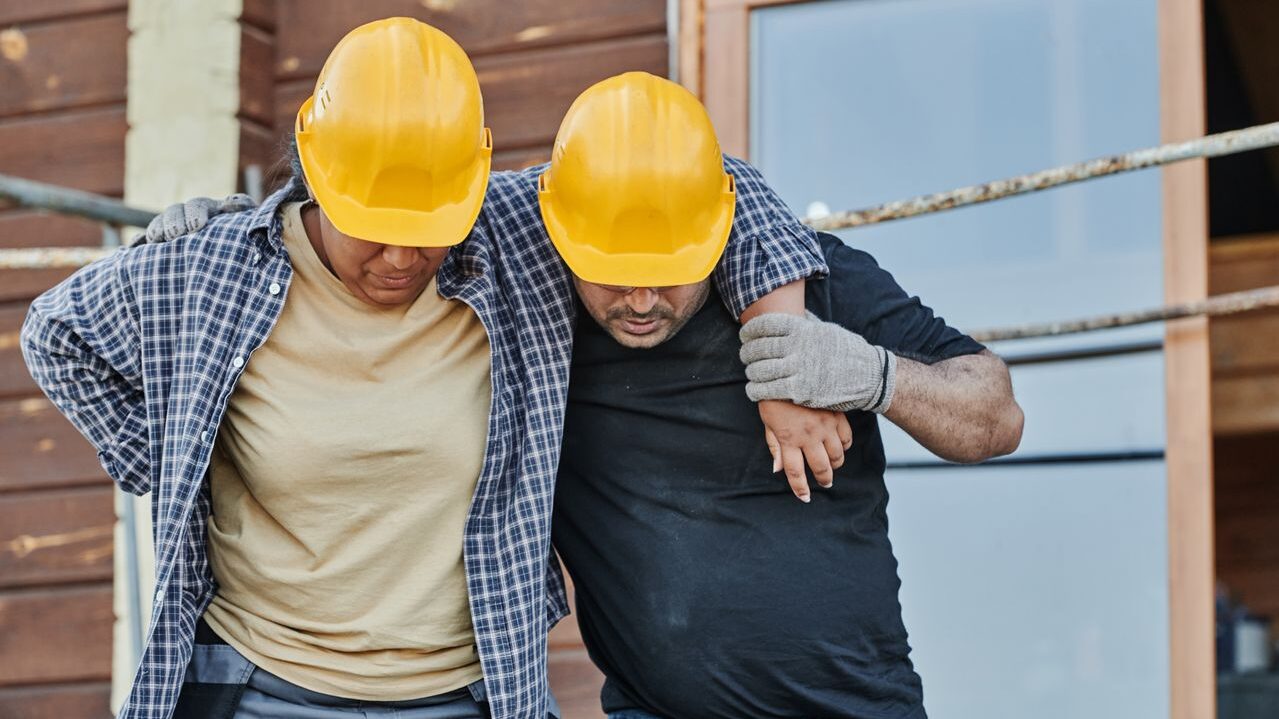
Construction work is dangerous even when everyone is doing their job. Heavy equipment, scaffolding, ladders, delivery trucks, open trenches, electrical hazards, temporary walkways, and multiple crews working in the same space can all create serious risks. When something goes wrong, one unsafe condition or careless decision can leave a worker facing pain, missed wages, medical treatment, and uncertainty about what comes next.
After a construction site injury, many workers are told the same thing: “This is just workers’ comp.”
Sometimes, that is true. Sometimes, it is not the whole story.
In New Jersey, workers’ compensation can provide important benefits after a job-related injury. But if another contractor, property owner, equipment company, driver, or other third party helped cause the accident, workers’ comp may not be the only claim available.
That distinction can matter. A serious construction injury can affect far more than your immediate medical bills or missed paychecks. It can affect your ability to work, support your family, return to your trade, and live without daily pain.
This article explains when a New Jersey construction accident may involve more than workers’ compensation, why third-party claims matter, what evidence should be preserved, and why it is important not to let the claim be treated too narrowly from the start.
Workers’ Compensation Is Important, But It Has Limits
If you are hurt while working on a construction site, workers’ compensation is often the first system involved. Workers’ compensation can provide authorized medical treatment, a portion of lost wages, and disability benefits when an injury causes temporary or permanent limitations.
Those benefits can be extremely important, especially if you are unable to return to work and medical appointments and expenses are piling up.
But workers’ compensation is not the same as a personal injury lawsuit. In most cases, workers’ comp does not compensate an injured worker for pain and suffering in the same way a personal injury claim would. It may provide critical medical and wage benefits, but it may not address the full personal impact of a serious injury, including the daily disruption of living with a back injury, the stress of surgery, the loss of independence after a fall, or the long-term effect an injury has on your ability to provide for your family.
For many injured construction workers, the question is not only, “Can I get workers’ comp?” The larger question is, “Is workers’ comp the only claim available?”
Can You Sue Someone Other Than Your Employer After a New Jersey Construction Accident?
Construction sites often require many different companies to work in the same space at the same time. On a job site, there may be a general contractor, subcontractors, property owners, equipment rental companies, delivery drivers, engineers, vendors, utility companies, and other workers, each with different roles in the project.
That is one reason construction accident cases can get quite complicated.
If your injury was caused by your direct employer’s negligence or by a coworker employed by the same company, workers’ compensation may be your primary remedy against the employer. That said, if another person or company contributed to the unsafe condition that led to your injuries, you could have a third-party claim in addition to workers’ compensation.
For instance, a third-party claim should be considered if you were injured because:
- A subcontractor created a dangerous condition on the site.
- A delivery driver struck you while entering or leaving the work area.
- A property owner, general contractor, or site controller failed to address, warn about, or reasonably manage a dangerous condition.
- A piece of equipment was defective or poorly maintained.
- A ladder, scaffold, forklift, crane, or power tool malfunctioned.
- Another company failed to follow basic site safety procedures.
- Falling debris, unsafe walkways, missing barriers, or poor site coordination created dangerous conditions that caused the accident.
These cases often require a thorough investigation into the facts. After a serious work accident, the first thing you hear may not be the full story. That is why it is important to look carefully at who was present on the site, who controlled the area, who created the hazard, and who had the responsibility to prevent the accident from occurring.
At Rudnick, Addonizio, Pappa & Casazza PC, our attorneys understand that construction accident cases often involve more than one claim, one company, or one insurance policy. When a worker is seriously injured, our role is to look beyond the first explanation and examine whether another contractor, property owner, equipment provider, driver, or other third party contributed to the accident.
“My Employer Said I Can’t Sue.” Is That Always True?
This can be one of the most stressful points for injured workers. Many people are told they cannot sue because their injury happened at work. That may be partly true, but it is often misunderstood.
In many New Jersey work injury cases, an employee generally cannot sue their own employer for ordinary negligence because workers’ compensation is the remedy against the employer. But that rule does not automatically protect every other company or person involved in the project.
There are also limited situations where an injured worker may be able to bring a direct claim against an employer, such as when the employer’s conduct qualifies as an intentional wrong or when the employer failed to carry required workers’ compensation insurance. These are fact-specific issues, and the intentional-wrong exception is a high legal standard. For most injured construction workers, the more common question is whether a negligent third party contributed to the accident.
If a subcontractor, property owner, outside driver, equipment manufacturer, or another third party caused or contributed to your injury, you may be able to bring a separate personal injury claim against that party.
This is not about filing unnecessary claims. It is about identifying all available sources of recovery when another person or company may have contributed to a serious injury. Construction workers do difficult, physical work. When an accident leaves someone unable to climb, lift, drive, stand, kneel, or return to their trade, the financial consequences can last far longer than the first few weeks after the accident.
What Can a Third-Party Claim Cover That Workers’ Comp Does Not?
A third-party personal injury claim may allow an injured worker to pursue damages that go beyond workers’ compensation benefits. Depending on the facts, this could include compensation for pain and suffering, future medical needs, loss of earning capacity, permanent impairment, and compensation for the broader effect of the injury on daily life.
Consider this example: a worker falls from a scaffold because another contractor removed a safety feature. Workers’ compensation would typically help with medical treatment and wage replacement. But if that worker needs surgery, cannot return to the same position, and now has to live with permanent pain, the full harm could extend beyond what workers’ comp alone provides.
Consider another example: a worker is struck by a truck delivering materials to a New Jersey construction site. That worker may have a workers’ compensation claim because the injury happened while they were working. But there may also be a separate claim against the driver or the driver’s employer if negligent driving caused the collision.
Every detail matters, especially when the accident scene may change quickly.
Evidence Can Disappear Quickly After a Construction Accident
Construction sites change fast. Equipment gets moved. Temporary barriers get taken down. Subcontractors leave. Surveillance footage could be overwritten. Defective tools might be repaired, replaced, or discarded. Workers move on to the next job.
That is why preserving evidence is so important.
After a construction site injury, useful evidence typically includes photographs of the accident location, witness names, incident reports, medical records, safety meeting records, equipment maintenance logs, subcontractor information, inspection records, delivery schedules, and communications about the hazard.
If you are physically able, take photos of the area, your injuries, the equipment involved, and any visible hazard. If you cannot, ask someone you trust to help. Report the injury as soon as possible and make sure you explain how it happened. When you receive medical care, be clear about where you were hurt, what you were doing, and what caused the injury.
Small details can become important later.
For example, there is a major difference between saying, “I fell at work,” and saying, “I fell because a subcontractor left unsecured material in the walkway.” The first statement might point only to workers’ comp. The second would help identify whether a third-party claim might need to be investigated.
Why a Construction Accident Should Be Reviewed Beyond Workers’ Comp
After a construction site injury, the first focus is often the workers’ compensation claim. That makes sense. You need medical treatment, wage benefits, and answers about what happens while you are out of work.
But the workers’ compensation process is not designed to answer every question about third-party fault. It may not examine whether a subcontractor created the hazard, whether defective equipment was involved, whether a property owner failed to correct an unsafe condition, or whether another company on the site contributed to the accident.
That is why a serious construction injury should be reviewed with the full job site in mind. Someone should be asking who controlled the area, who was responsible for the condition that caused the injury, and whether a separate third-party claim should be investigated.
What Deadlines Apply After a New Jersey Construction Accident?
Timing also matters because workers’ compensation claims and third-party personal injury claims do not always follow the same path.
In New Jersey, a third-party personal injury lawsuit generally must be filed within two years of the accident date. A formal workers’ compensation claim petition also generally has a two-year deadline, which may run from the date of the accident or the date of the last voluntary compensation payment.
Injured workers should also report the accident to their employer as soon as possible. Prompt reporting can help avoid problems in documenting the claim, especially if disputes later arise about when, where, or how the injury happened.
Some cases may involve additional timing issues. For example, accidents connected to public entities, public property, roadway work, or government projects may involve shorter notice requirements. If workers’ compensation benefits have been paid and a third-party claim is pursued, lien or reimbursement issues may also need to be addressed as part of the case.
These deadlines are another reason to ask questions early. If a construction accident may involve more than one company, more than one insurance policy, or more than one type of claim, it is important to understand which deadlines may apply before time becomes another obstacle.
Talk to a New Jersey Construction Accident Lawyer About Your Options
Many injured workers wait to reach out to a lawyer because they do not want to make trouble, they are worried about their job, or they assume there is nothing more they can do. Many people try to work through pain because their families depend on them. For many New Jersey workers, missing even one paycheck can create immediate pressure.
Asking questions after a serious injury is not the same as being difficult. It is responsible.
If you were injured on a construction site, you deserve to know what benefits might be available for your case, whether all responsible parties have been identified, and whether a workers’ compensation claim is truly your only option.
At Rudnick, Addonizio, Pappa & Casazza PC, our attorneys represent injured workers and accident victims in Monmouth County, Middlesex County, Ocean County, and throughout New Jersey. We understand how disruptive a serious injury can be for construction workers and their loved ones, and we know how important it is to investigate these cases carefully from the beginning.
If you were hurt on a construction site in New Jersey, contact our firm to discuss your situation and learn what legal options may be available.
Disclaimer: The articles on this blog are for informational purposes only and are no substitute for legal advice or an attorney-client relationship. If you are seeking legal advice, please contact our law firm directly.